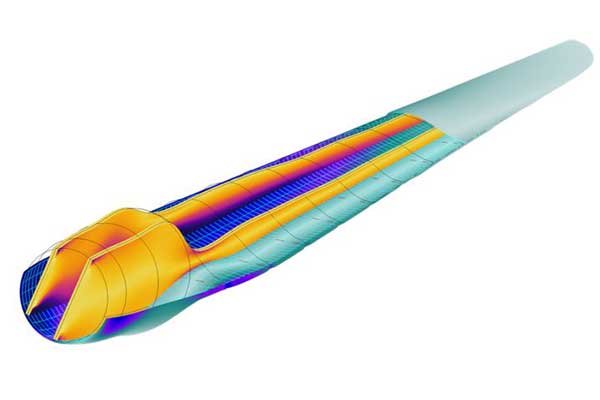
Introduction
Wind energy is one of the fastest-growing renewable energy sources. However, wind turbine blades are constantly exposed to high-speed rotation, varying weather conditions, and mechanical stress, which can lead to structural damage over time.
This article explores potential damages in composite wind turbine blades and the advantages of using robotic inspection systems for maintenance.
Common Types of Blade Damage
Wind turbine blades are primarily made from fiberglass, carbon fiber, and epoxy resin composite materials. Over time, these materials can degrade due to various environmental and operational factors:
-
Surface Erosion and Wear
- Rain, snow, hail, and sandstorms can cause surface erosion.
- Erosion reduces aerodynamic efficiency, decreasing energy production.
-
Cracks and Delamination
- High wind loads and temperature fluctuations can create micro-cracks and delamination in the blade material.
- If left untreated, these cracks can compromise the structural integrity of the blade.
-
Weakening of Joint Connections
- The connection between the blade and the rotor hub can weaken due to vibrations and mechanical stress.
-
Lightning Damage
- Wind turbines are prone to lightning strikes, causing burn marks, carbonization, and internal damage.
Advantages of Robotic Inspection
Traditional wind turbine inspections are conducted by manual visual inspections or drone-based surface assessments. However, robotic systems make the process safer, faster, and more precise.
-
Faster and More Efficient Inspections
- Robotic systems can scan both the interior and exterior of turbine blades quickly, reducing downtime.
- Autonomous or remotely controlled robots eliminate the need for human intervention.
-
High-Precision Data Collection and Analysis
- High-resolution cameras, thermal sensors, and laser scanners detect even the smallest micro-cracks and defects.
- 3D mapping and AI-powered analysis generate comprehensive damage reports.
-
Enhanced Safety
- Traditional inspections require technicians to work at high altitudes and in hazardous conditions.
- Robotic systems minimize safety risks.
-
Cost Savings
- Early damage detection prevents expensive repairs.
- Operational efficiency is maintained, reducing downtime and improving energy production.
Conclusion
Regular inspections of wind turbine blades are essential for maintaining efficient energy production and minimizing operational costs. Robotic inspection systems offer a faster, safer, and more effective alternative to traditional methods, making them a valuable tool in the wind energy sector.
🚀 At Onna Robotics, we optimize wind turbine maintenance with cutting-edge robotic solutions. Contact us to learn more!