From the outside, wind turbine blades appear seamless and solid. However, beneath this massive composite shell lies a complex internal structure consisting of main spars, webs, and critical adhesive joints that carry the entire dynamic load. Ensuring a turbine continues to operate safely depends not only on the cleanliness of its exterior surface, but also on the structural integrity of these internal components.
Traditionally, internal blade inspections required trained technicians to enter through a narrow hatch at the root and crawl through dark, cramped, and potentially toxic confined spaces. This approach posed significant safety hazards for personnel and made it physically impossible to inspect the narrowing sections toward the blade tip.
Today, Internal Blade Inspection Robots are stepping in to take over this hazardous task.
How Do They Work?
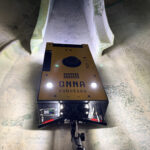
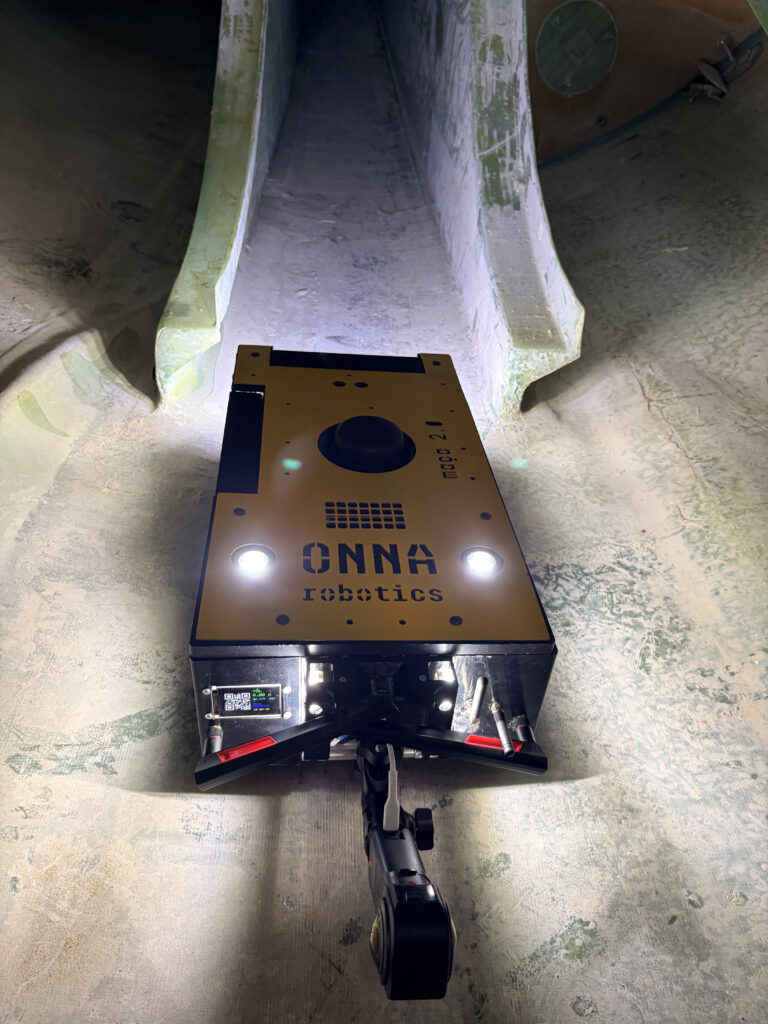
Internal blade inspection robots are compact, wheeled or tracked autonomous crawler systems specifically engineered for the internal geometry of the blade. Inserted at the blade root, these devices travel along the interior cavity and perform detailed scans using advanced technologies:
-
360° Lighting and High-Resolution Cameras: Powerful LED arrays illuminate the pitch-black interior, capturing high-quality images of resin runs, adhesive voids, and surface micro-cracks.
-
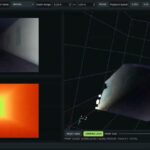
LiDAR and 3D Mapping: Generates a 3D digital model of the internal cavity, pinpointing structural deformations with millimeter-level precision.
-
Non-Destructive Testing (NDT) Sensors: Employs ultrasonic sound waves to inspect below the composite surface, detecting delamination and internal bonding defects.
Core Advantages
-
Enhanced Occupational Safety: Eliminates the need for personnel to enter hazardous confined spaces.
-
Complete Coverage: Easily reaches narrow sections toward the blade tip that are physically inaccessible to humans.
-
Time and Cost Efficiency: Completes inspections significantly faster than manual methods, minimizing turbine downtime.
-
Digital Twins and Historical Data: All captured data is archived with precise spatial coordinates, enabling predictive maintenance tracking throughout the turbine’s lifecycle.
Get Started Today
Looking to optimize your wind turbine maintenance with cutting-edge robotics? Contact us today to rent a blade inspection robot or request our professional inspection services.