Wind turbines are marvels of modern engineering, but the true heroes defining their performance are the blades. Exposed year-round to rain, hail, salt spray, and lightning strikes, turbine blades gradually lose their aerodynamic efficiency.
While traditional visual inspections have served the industry for years, they are now giving way to data-driven, autonomous robotic systems. So, why is the new generation of “Blade Inspection” no longer just an option, but a necessity?
1. Beyond the Surface: Aerodynamics and Structural Integrity
Even millimeter-sized erosion on the leading edge can cause energy production losses of up to 5% (AEP). However, the problem isn’t always just on the surface. Traditional rope access methods are effective at spotting visible cracks but come with significant operational challenges and high HSE risks. At Onna Robotics, our autonomous drone solutions provide high-resolution imaging to map surface defects while completely removing human personnel from the danger zone.
2. A Critical Safety Line: LPS (Lightning Protection System)
The most frequently overlooked yet critical aspect of blade maintenance is the Lightning Protection System (LPS). A blade’s exterior may look flawless, but if the internal copper conductor is broken or the receptors have lost functionality, that blade could be lost in the very next storm.
This is where the Onna Robotics difference comes into play: Contact-Based Measurement Technology. We don’t just look from a distance. Using our specialized LPS drone, we physically touch the blade tip and test conductivity with milli-ohm precision. In this industry, this is the difference between “seeing” a problem and “knowing” it exists.
3. The Dark Zone: Internal Inspection
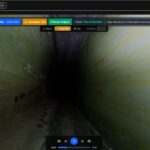
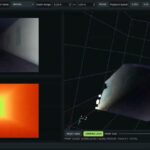
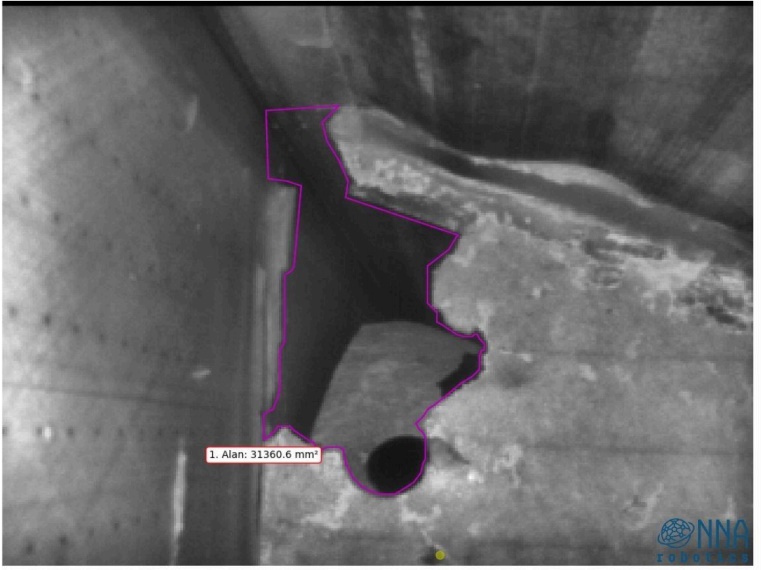
The interior of a wind turbine blade is a dark, confined, and isolated tunnel. Critical issues like bonding failures, delamination, or bulkhead damage are often invisible from the outside. Onna Robotics’ Internal Crawlers venture into this challenging environment to inspect the “internal health” of the blade. Equipped with specialized lighting and camera systems, our wheeled robots report structural weaknesses deep within the core, preventing catastrophic failures before they happen.
Why Autonomous Inspection?
-
Speed: We reduce inspections that used to take days down to mere hours. Downtime decreases, and energy production increases.
-
Safety: We eliminate the risk of technicians hanging by ropes at heights of 100+ meters.
-
Data Quality: Instead of manual notes, we provide digitized, mapped, and traceable data compatible with Digital Twin standards.
Conclusion: An Integrated Ecosystem
At Onna Robotics, our vision is simple: To provide a complete inspection ecosystem that covers every inch of a wind turbine, whether offshore or onshore.
While we assess LPS and surface integrity from the air with our drones, we analyze structural health from the inside with our robots. Our goal is to offer operators not just a “fault report,” but a comprehensive “health map” that extends the lifespan of their assets.
May your wind be steady and your energy uninterrupted.